


Ink Production Machine Innovations from Polyc Machine for High-Precision Output

In the demanding realm of ink manufacturing, precision is not a luxury—it is the absolute bedrock of quality, performance, and customer trust. The difference between an ink that lays down perfectly on a high-speed press and one that causes clogs, streaks, and costly downtime can be measured in microns and milliseconds. Pushing the boundaries of what's possible requires more than just robust equipment; it demands continuous innovation at every stage of the process. Polyc Machine has established itself at this forefront, not by reinventing the wheel, but by re-engineering every component of the ink production machine with a singular focus on achieving and guaranteeing high-precision output. Their latest innovations represent a leap forward, offering manufacturers the tools to produce inks of exceptional consistency and sophistication.
Adaptive High-Shear Dispersion with Real-Time Rheology Feedback
The foundation of any superior ink is flawless dispersion, and Polyc's most significant innovation here is the move from fixed-parameter processing to adaptive, intelligent dispersion. Their latest disperser units are equipped with advanced torque and power sensors that feed data into a machine-learning algorithm. As the machine runs, it doesn't just follow a pre-set time and speed recipe; it analyzes the real-time rheological changes in the paste. The system dynamically adjusts the shear force and rotor speed to match the exact state of the batch, optimizing energy input to break down agglomerates without over-shearing delicate pigments or generating excess heat. This closed-loop feedback ensures that the dispersion stage consistently achieves the optimal particle wetting and color development for every formulation, from a simple flexographic ink to a complex conductive paste, laying a perfect foundation for what follows.
Nano-Level Milling with Predictive Particle Size Analysis
For many high-performance inks, especially for digital or packaging applications, achieving a sub-micron or even nano-scale particle size is critical. Polyc's innovation in milling technology focuses on predictive control. Their advanced circulation bead mills are now integrated with real-time laser diffraction particle size analyzers. Instead of milling for a set duration or number of passes, the system continuously monitors the particle size distribution as it mills. The milling cycle automatically concludes the precise moment the target particle size profile is achieved, eliminating both under-milling and the wasteful over-processing that can degrade ink properties. This ensures not just a "fine" grind, but a consistently exact and repeatable particle distribution, which is paramount for ink gloss, transparency, and jetting stability in piezo printheads.
AI-Powered Formula Optimization and Batch Correction
Moving beyond process control, Polyc has introduced artificial intelligence into the recipe management system. This innovation acts as a virtual production chemist. The AI analyzes historical batch data—ingredient lot variations, ambient humidity, slight process deviations—and correlates it with the final, tested quality of the ink. Over time, the system learns and can suggest micro-adjustments to new batches in real-time. For example, if a new shipment of pigment has a slightly different moisture content, the AI might recommend a minor adjustment to the solvent balance during dispersion to compensate, ensuring the final viscosity and performance remain identical to previous perfect batches. This proactive correction minimizes the need for post-production adjustments and rework, driving yield and consistency to unprecedented levels.
Closed, Aseptic Filling for Specialty and Sensitive Inks
The final stage of production—filling—is often where precision can be lost, especially for sensitive inks like those for food packaging, medical device printing, or electronics. Polyc's innovation here is a fully integrated, closed-loop aseptic filling module. This system maintains the ink in a sealed, controlled environment from the holding tank directly into the final container, be it a pouch, cartridge, or pail. The fill heads utilize ultra-precise mass flow meters, and the entire process can be conducted under an inert nitrogen blanket to prevent oxidation or moisture uptake. This eliminates contamination from airborne particles, ensures exact fill weights to minimize giveaway, and preserves the delicate chemical integrity of the ink from production line to end-user application, a critical requirement for an expanding range of industrial applications.
Integrated In-Line Spectrophotometry for Color Perfection
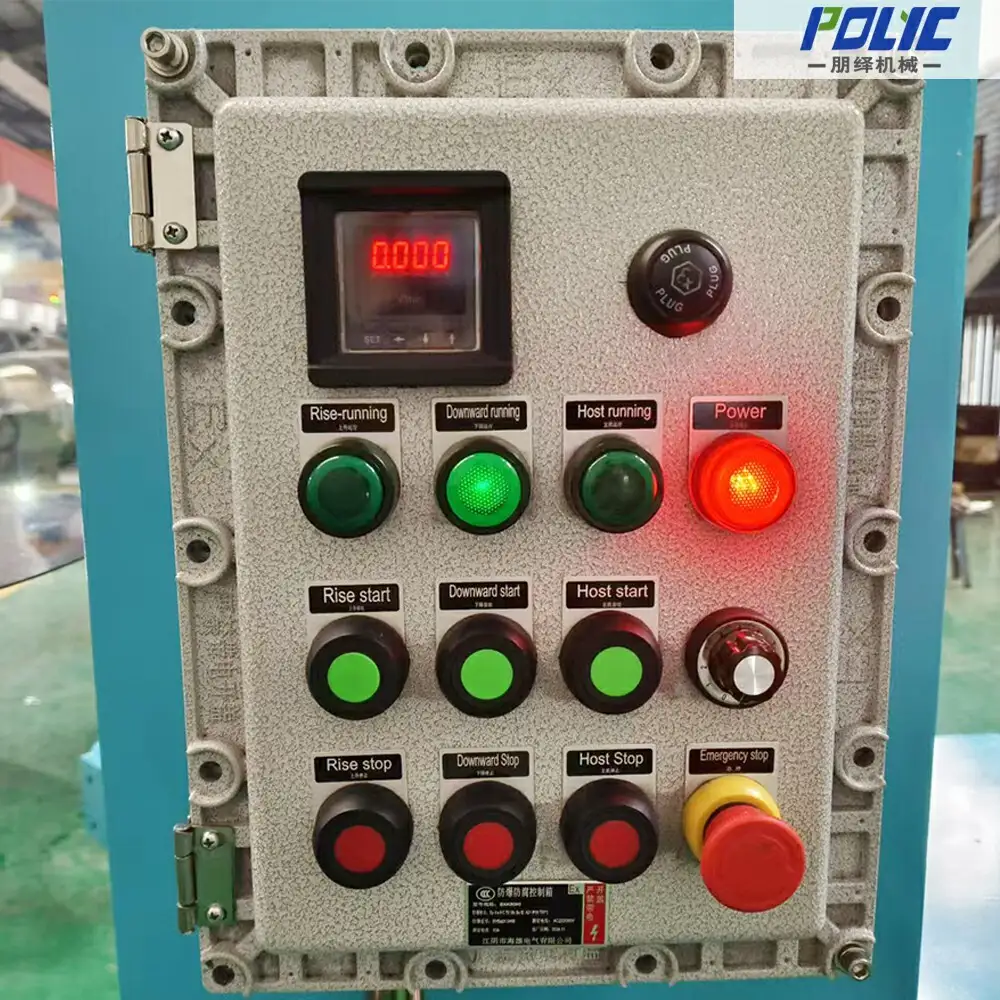
Color matching is arguably the most visible test of precision. Polyc’s latest systems incorporate in-line spectrophotometers directly into the main process loop. As the ink circulates after final adjustment, the spectrophotometer continuously scans the color, comparing it to the digital standard (such as a Pantone or custom brand color). The data is fed instantly to the control system, which can automatically dispense micro-adjustments of colorants to correct any deviation, all before the batch is deemed complete. This innovation closes the loop on color control, removing the lag time and potential error of offline lab sampling. It guarantees that every batch shipped is a perfect visual match, eliminating costly press-side corrections for the printer and solidifying the ink manufacturer’s reputation for flawless color delivery.
The Digital Twin: A Virtual Replica for Process Perfection
The overarching innovation unifying all others is the development of a true digital twin for the ink production line. This is a dynamic, virtual software model of the entire physical machine. Engineers can simulate new formulations or process changes in the digital twin to predict outcomes before ever running a live batch. It allows for virtual troubleshooting and process optimization without wasting raw materials. More importantly, the digital twin runs in parallel with the physical machine, comparing predicted sensor data with real data. Any anomaly flags a potential issue before it affects quality. This virtual-physical synergy represents the pinnacle of precision manufacturing, transforming the production line from a reactive tool into a predictive and self-optimizing asset dedicated to delivering perfect ink, every single time.

 English
 Arabic
 French
 Spanish
 Portuguese
 Turkish
 Dutch
Dutch
 Italiano
 Russian
 Romaian
 Portuguese (Brazil)
 Greek
Greek
